Politics & Government
Hashamomuck Cove Resident Calls for Faster Action Near Narrow Roadway
County moving forward with study of erosion-prone stretch on Route 48.


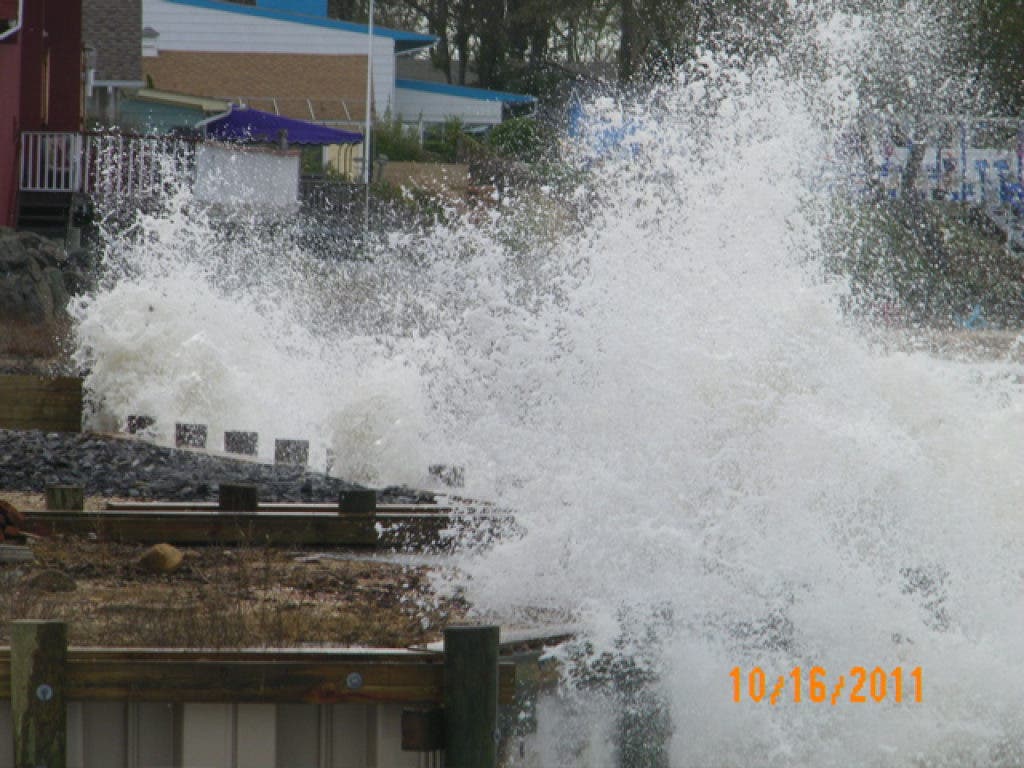


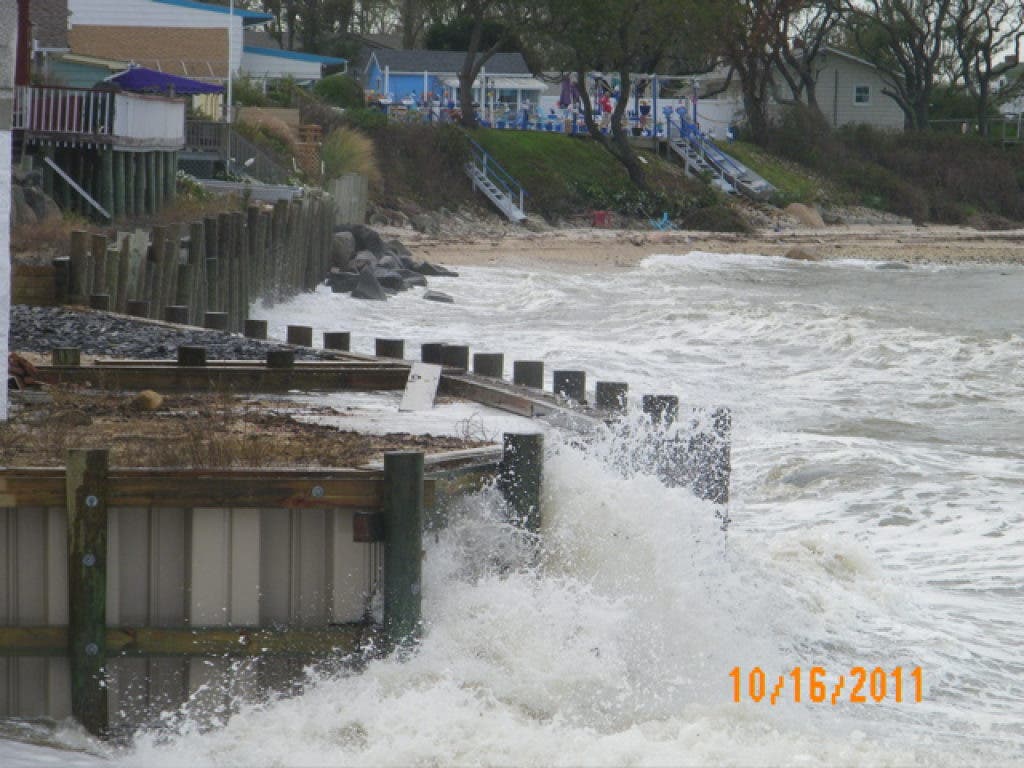


After Hashamomuck Cove resident Lynn Laskos said water levels rose to "within six feet of Route 48" , the chair of the Hashamomuck Cove Group is again calling for expedited action to ensure that the narrow stretch of land between the Long Island Sound and Hashamomuck Pond doesn't wash away.
"We had no storm this weekend, but by 10 o'clock Saturday all hell had broken loose," Laskos said. "Our whole cause is that if the road washes out, that leaves Route 25 as the only in and out road between here and East Marion. What will happen if an ambulance needs to get to somebody who's having a heart attack?"
Laskos has been calling for a long-term solution in the area for years after what was her parents' home at the time washed away in 1994. She and other local representatives held a press conference just over a year ago accusing state officials of dragging their heels in funding a feasibility study which would look into preserving four shoreline areas in Southold.
Find out what's happening in North Forkwith free, real-time updates from Patch.
A reconnaissance study (attached as a pdf file) completed by the Army Corps of Engineers in June of 2008, found that payment for the feasibility study — which would cost roughly $4.2 million — should be split between federal and local (county and town) entities. It remains unfunded.
A spokesman for state Sen. Ken LaValle, R-Port Jefferson, said that, "any time there is money available, Mr. LaValle says that the Hashamomuck Cove project needs to get done. He will look into restoring funding for the project in the upcoming budget cycle."
Find out what's happening in North Forkwith free, real-time updates from Patch.
The lack of reassurance has left county officials attempting to save the stretch of roadway it owns. Suffolk County is currently moving forward with a plan to fund a study of its own to ensure the safety of Route 48. In May, the county approved $100,000 to go to bond for a planning study of just the Hashamomuck Cove stretch.
"We don't feel we have much time," said Bill Faulk, legislative aide for County Legis. Ed Romaine, R-Center Moriches. "Wave erosion has definitely increased. And we feel if we can get our own plan, we can likely get a permit from the Army Corps of Engineers and the [Department of Environmental Conservation] to do work as long as we're funding it ourselves."
Faulk said the county Department of Public Works would be putting out a request for bid proposals by the end of the month for the study, however DPW officials could not immediately confirm.
A steel sheathing had also been proposed as a temporary measure last year — to be paid for between New York State and Suffolk County — however, Faulk said the proposal would have been "less than a Band-Aid" and the county decided not to proceed.
While Supervisor Scott Russell stated that "the town shouldn't be in the business of trying to restore private homes," he said that contributing to the cost of the study — roughly 30 percent of the local share, according to Faulk — shouldn't be a problem for the town.
With harsh winter weather around the corner, Laskos is hoping the "wheels of government start to spin before it's too late." Laskos and some of her neighbors received an emergency permit for repairs following last year's Dec. 26 storm, and may be eligible for others in the future.
The DEC defines eligibility for an emergency authorization request as the following: "'Emergency shall mean a natural or accidental human-made event which presents an immediate threat to life, health, property, or natural resources."
Get more local news delivered straight to your inbox. Sign up for free Patch newsletters and alerts.


